- Membership
- Certification
- Resources
- Events
- Community
- About
- Help
In this episode, compliance expert Jason Dinesen joins host Grace Berube to share five practical steps AP teams can take to strengthen their information reporting processes. With 1099 season behind them, Jason walks through foundational W-9 habits, a pair of new Treasury regulations on cloud transactions, the IRS’s plan to retire the FIRE e-filing system, the growing complexity of state 1099 filing obligations, and the value of having written procedures in place before the next reporting cycle begins.
WHAT YOU’LL LEARN IN THIS EPISODE
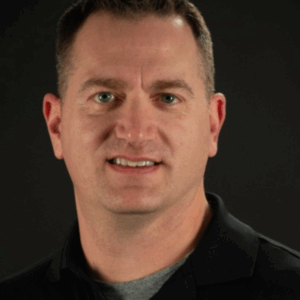
Jason Dinesen
President, Dinesen Media Ventures
Jason Dinesen, EA, is a distinguished tax professional and educator with a fervent passion for demystifying complex tax concepts. Jason prepared tax returns and provided accounting services as a practicing accountant from 2009 through the summer of 2025.
He’s also the founder of Dinesen Media Ventures, which provides a diverse range of media content, ranging from continuing education programs for accountants and tax professionals, to podcast production to radio and journalism content.
Recognized for his sharp tax interpretations, Jason is renowned for promptly analyzing the latest tax updates and IRS guidance, sharing his insights with the professional community. Over his career, he has educated more than 200,000 accounting, tax, and HR professionals on various topics. Form 1099 was the very first thing he ever taught on, on April 26th, 2012, at a Sheraton Hotel next to a Lowe’s in West Des Moines, Iowa. He is IOFM’s go-to person for anything related to 1099s and information reporting.

Grace Berube
Senior Content Manager, IOFM
Grace is the Senior Content Manager at the Institute of Finance & Management (IOFM), where she has led content strategy and development since 2022. In this role, she oversees all aspects of IOFM’s digital and event-based content, ensuring it remains timely, relevant, and actionable for all financial operations professionals.
Grace manages IOFM’s robust library of site content, leads the organization’s editorial and member webinar programming, and hosts IOFM’s podcast series. She also oversees a team of subject matter experts who contribute thought leadership and educational articles. In additional, Grace curates and manages all speaker content for IOFM’s in-person and virtual events, ensuring consistency and quality across every touchpoint. With nearly three years in the role, Grace brings a deep understanding of the financial operations landscape and a passion for delivering content that empowers professionals to excel in their roles.
Listen below and subscribe on Apple Podcasts today.

Grace Berube: Welcome to the IOFM podcast. This is a podcast for accounts payable and accounts receivable professionals who want to stay in the know with current AP and AR trends and ideas. We’ll be interviewing professionals in this space on a wide variety of subjects, including automation, artificial intelligence, career growth, compliance, leadership, and much more.
Hey, Jason. How's it going?
Jason Dinesen: I'm good, Grace. How are you?
Grace Berube: I'm doing good. Welcome back to the podcast. So we're done with 1099 season, but there's still lots that you can do to make sure that you're better equipped for next season. And there's just a lot going on in the compliance world, in general.
Jason Dinesen: Absolutely, there is.
Grace Berube: So today we're going to talk about information reporting and how to make 2026 even better by using that. Talk to me a little bit about that. I'm pretty much going to let you take the wheel, as usual, with our 1099 chat. So tell us a little bit about what we're talking about today.
00:01:03
Yeah, well, I thought that it would be good to talk about: How can you make 2026 even better when it comes to information reporting, whether it's 1099 or 1042-S, your W-9 procedures, all of those things come into play. And it's still early in the year as we record this, and that means that you have time to get things in place and make them usable for most of the year before you have to deal with 1099s again in early 2027.
00:01:39
So I came up with a list of five different things that could make your life better with information reporting in 2026. The first one on that list is: Get W-9s. Now, I know a lot of our listeners who are IOFM listeners are good about getting W-9s, and that's great. But if your organization is not good about getting W-9s, then you want to make sure you take care of that problem, because it really is a problem.
If there was only one thing that you took away from this, and one change that you made for 2026, it would be to get W-9s, if you're not doing so already. It really is your best friend with information reporting, and it'll solve basically every 1099 problem that you can think of.
00:02:41
Now, the second thing gets deep, and we're going to have some webinars about this at IOFM, and I'm sure we'll be talking about it again in webinar format. It's a little difficult in podcast format. Maybe we'll try sometime down the road. But cloud transactions—the Treasury Department released two regulations in 2025 relating to cloud transactions. Those would be things like software as a service, but not just software as a service. In "Ask the Experts," we get a lot of questions about places that subscribe to research libraries where they can access articles and such. That would fall into this, too. There's way more than we can really say in a podcast about this, but just recognize cloud transactions and how, in particular with software as a service, it's probably a service that your SaaS provider is providing.
00:03:55
And when you hear that word "service," that means contract labor. Now, if it's a U.S.-based SaaS provider, it's not so bad. Just get a W-9 from them and you might need to issue a 1099-NEC to them. But remember, you have things like the corporate exception and the exception for payments with a credit card, where you don't actually have to send a 1099.
The bigger issue with cloud transactions is a lot of IOFM members have SaaS providers based in other countries. We get a lot of questions about this. I think that we should kind of just stop with item number two, which is recognize cloud transactions and just leave it as: If your SaaS provider is in another country, you need to talk to applicable counsel on your side on how you're going to deal with the fact that SaaS transactions probably are the provision of a service. So, number two: recognize cloud transactions.
00:05:10
Number three: Check your e-filing systems. There's two things on this. One is if you're doing things in-house, that means you're using either the IRS' IRIS system or the FIRE system, and the IRS' plan is to shut FIRE down at the end of this year. So, if you've been using FIRE, you're going to have to transition to IRIS, which involves different transmitter codes. It involves different file formats. And so I would say, start learning about those things sooner rather than later.
00:05:56
The other piece of e-filing systems is if you use a third-party vendor to do your filings. That takes care of the IRIS versus FIRE problem because the vendor deals with all of that, not you. But you should be asking: Do I like my vendor? Can they handle all of my needs? If you come to the spring or fall conferences at IOFM, there are several different vendors there that you could talk to. So, number three: Review your e-filing systems.
Number four is deal with state filings. And what I mean by that, now that we've come through filing season, it's more, really, think about what states do we might need to file 1099s in. The rules are always changing on this. People have asked if we can put together some resources on that, and I'm working on that, but that's a difficult thing because when we say that there's all these different states—there's 39 of them that might require some sort of 1099 filing. The rules are different in each state, and how they want you to file is different in each state.
00:07:25
But the best thing that you can do is figure out the states that you might have a filing obligation in, and then now and then go to the Department of Revenue website for those states and see what they're saying about information return filing. You don't have to do that every day, or even every week, but maybe just a few times a year. Put it on your calendar to spend some time reviewing the states that you might have a filing obligation in.
00:07:57
And then the fifth thing is procedures. So, first of all, if you have your procedures in writing, review them. This is a great time to review your procedures and see what worked with your information reporting for 2025 and what didn't, and what you need to change. And if you don't have procedures in writing, it's a great time to get procedures in writing. I know that may sound daunting, but it's really important, not just for your own internal purposes, but if you get audited, one way of getting out of penalties is what's called reasonable cause. And a way of showing reasonable cause is to show the IRS that you have procedures and you follow those procedures.
00:08:53
So, if you don't have your 1099 process in writing, get it in writing. And if you do have it in writing, review and see what additions or tweaks to that system might need to be made.
00:09:57
So I think with those five things, Grace, our listeners can set themselves up for a much better or happier information reporting world for 2026.
Grace Berube: That is awesome. Super concise and thorough. Thank you so much, Jason. I also know that this was talked about in one of our Compliance Corner issues. If you're an IOFM member, you've received those newsletters on the Compliance Corner, which Jason writes for us, and we're so thankful. There's probably an article as well on our website, so we can have that linked in the landing page copy of this podcast. But thank you so much, Jason. As always, so great to have you on the podcast. We'll put any supplemental information in the show notes, and we look forward to having you on the next episode.
00:10:42
Jason Dinesen: All right, thanks, Grace.
Grace Berube: Thank you so much for listening to the IOFM podcast. Remember to head on over to the Member Forum to discuss today's episode and provide ideas for our next one. And to stay up-to-date on IOFM's current events, both in-person and virtually, head on over to IOFM.com.
Continuing Education Credits available:
Receive 1 CEU per hour of listening time towards IOFM programs:
 Receive 1 CEU per hour of listening time towards maintaining any AP and P2P related program through IOFM! These programs are designed to establish standards for the profession and recognize accounts payable and procure-to-pay professionals who, by possessing related work experience and passing a comprehensive exam, have met stringent requirements for mastering the financial operations body of knowledge.
Continuing Education Credits available:
Receive 1 CEU per hour of listening time towards IOFM programs:
Receive 1 CEU per hour of listening time towards maintaining any AP and P2P related program through IOFM! These programs are designed to establish standards for the profession and recognize accounts payable and procure-to-pay professionals who, by possessing related work experience and passing a comprehensive exam, have met stringent requirements for mastering the financial operations body of knowledge.
What are you waiting for?